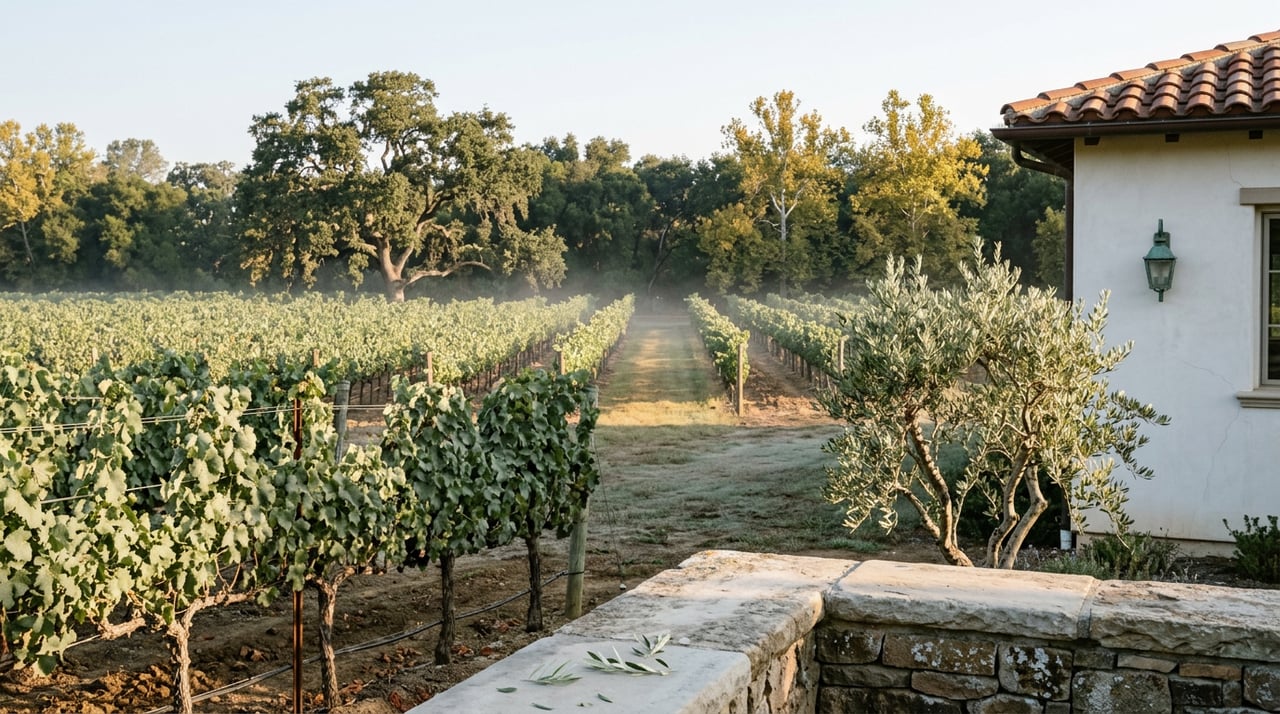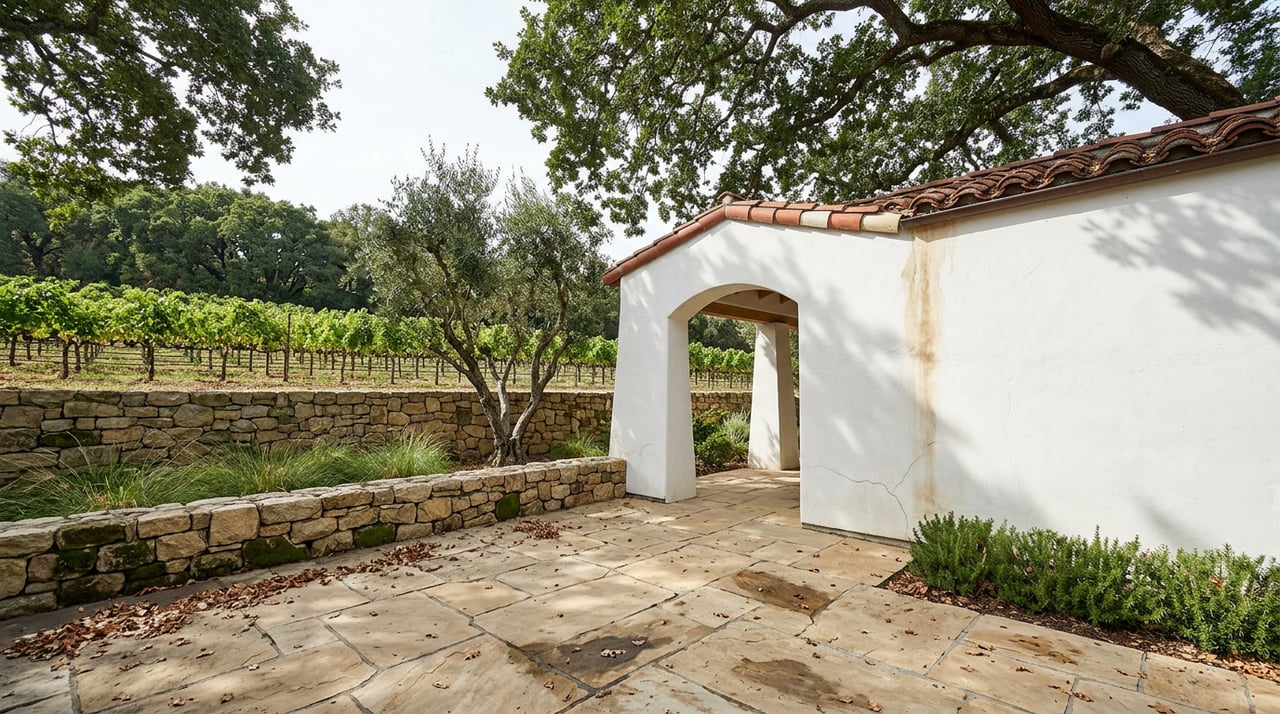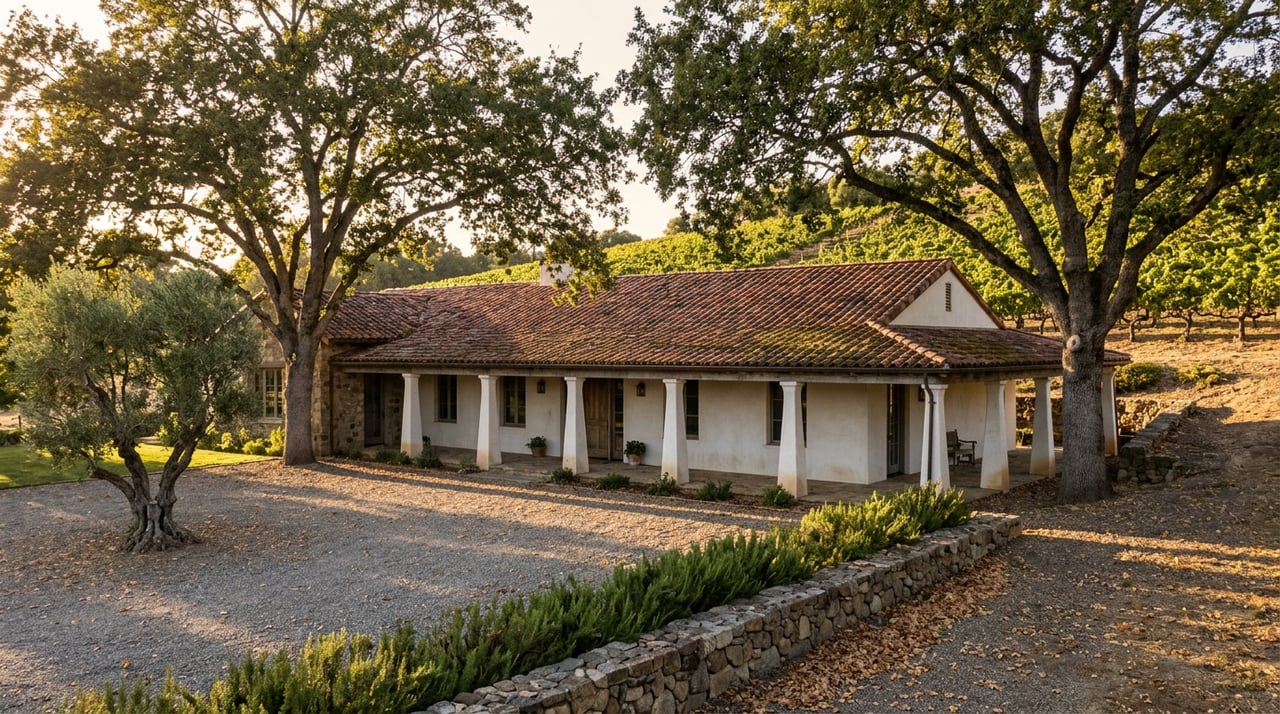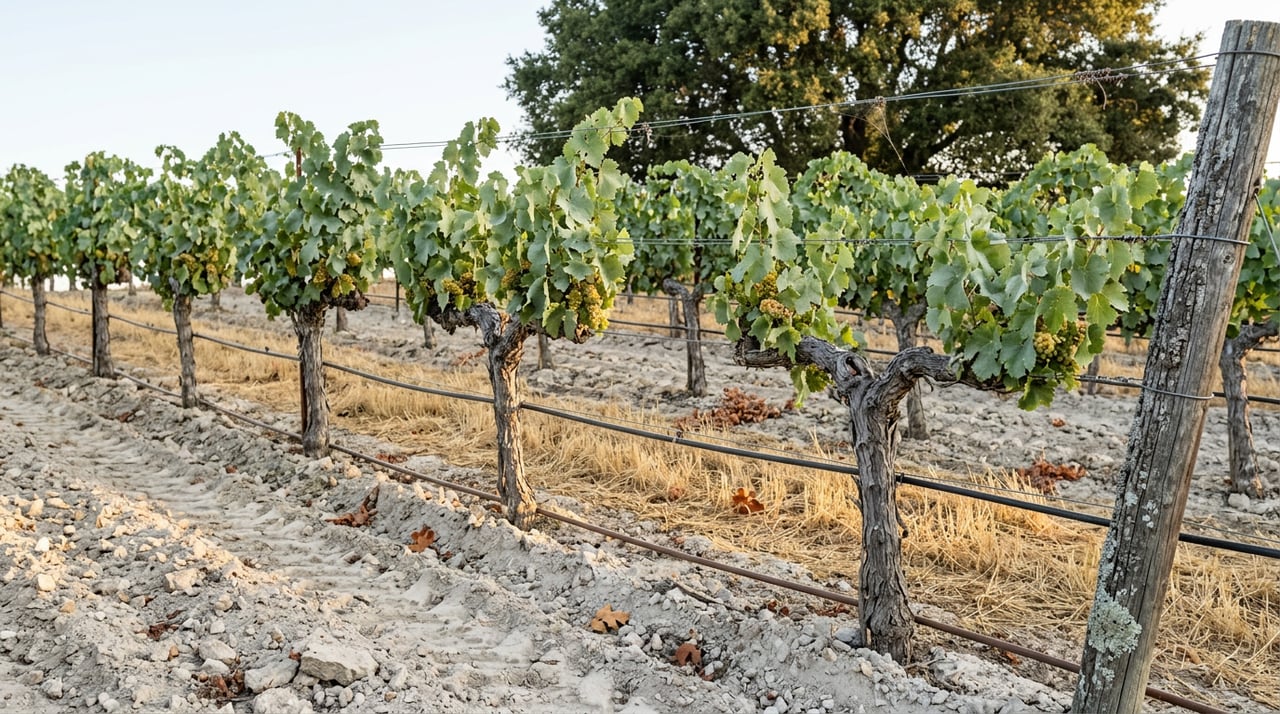
Buying or owning land in Chalk Hill can feel simple at first. You see a sought-after AVA name, imagine vineyard potential, and assume the rules follow the label. In reality, zoning, Williamson Act status, and Sonoma County tax rules can shape what you can do with a parcel far more than the AVA name itself. If you are evaluating a vineyard property, rural estate, or agricultural holding near Healdsburg, this guide will help you understand the basics and ask sharper questions before you move forward. Let’s dive in.
AVA Status vs. Land-Use Rules
Chalk Hill is a federally established American Viticultural Area, or AVA. That designation matters for wine labeling and regional identity, but it is not a land-use approval. In other words, being inside the Chalk Hill AVA does not automatically grant vineyard rights, building rights, short-term rental rights, or winery entitlements.
For land-use questions, Sonoma County remains the decision-maker. The county’s General Plan, zoning code, parcel-specific overlays, and permit review process control what may be allowed on a given parcel. That is why two properties in the same AVA can have very different development and use potential.
For a buyer or owner, the practical takeaway is simple: start with the parcel, not the marketing language. Sonoma County’s Parcel Search and GIS tools can show zoning, land use, groundwater availability, jurisdiction, and Williamson Act contract status. Those details often matter more than the AVA boundary itself.
Chalk Hill Zoning Basics
Many rural parcels in and around Chalk Hill fall into agricultural or low-density rural zoning categories. These designations affect density, uses, and what type of review may be required before you build or change use.
LIA Zoning
LIA, or Land Intensive Agriculture, generally applies to land best suited for permanent agriculture and relatively high production per acre. Sonoma County planning materials describe LIA density at about 20 to 100 acres per dwelling unit.
If you are looking at vineyard land, this is one of the more important designations to understand. It often signals a strong agricultural focus, but you still need to review the full zoning string and any overlays before assuming what is permitted.
LEA Zoning
LEA, or Land Extensive Agriculture, is aimed at non-intensive agriculture with larger parcel patterns and generally lower production per acre. Sonoma County planning materials describe LEA density at about 60 to 320 acres per dwelling unit.
For buyers seeking open land, privacy, or a lower-intensity agricultural setting, LEA parcels can look appealing. Still, lower density can also mean tighter limits on additional dwellings and development expectations.
DA Zoning
DA, or Diverse Agriculture, covers land that supports farming where smaller-acreage intensive farming and part-time farming are more common. Sonoma County planning materials describe DA density at about 10 to 60 acres per dwelling unit.
This category can be relevant if you are exploring a smaller agricultural property with mixed-use potential. Even so, parcel-specific details still matter because density codes and overlays can change the real-world picture.
AR Zoning
AR, or Agriculture and Residential, provides land for crops and farm animals in areas used primarily for rural residential purposes. County materials show AR at about 1 to 20 acres per dwelling unit.
For some buyers, AR sounds like the most flexible option. That may be true compared with more restrictive agricultural zones, but it is still important to confirm exactly what the parcel report says and what additional county review may apply.
RRD Zoning
RRD, or Resources and Rural Development, is Sonoma County’s very low-density rural and resource category. It is intended to protect resource lands while allowing compatible low-density rural development.
This can affect expectations for building, access, and future use. If your goal is a second residence, guest structure, or expanded residential program, RRD deserves close review early in the process.
Why the Full Zoning String Matters
One of the biggest mistakes buyers make is stopping at the base zone. Sonoma County’s parcel report shows the full zoning string, and that can include density codes or parcel-specific notes that affect what is actually allowed.
That means a parcel described broadly as agricultural may still have important restrictions or conditions. Before you underwrite a purchase, you should confirm the exact zoning string, any overlay districts, and any land-use notes attached to the parcel.
ADUs and Second Dwellings Are Not Simple
Many buyers assume that if they purchase a large rural parcel, they can add a guesthouse, rental cottage, or second unit later. In Sonoma County, that assumption can create expensive surprises.
County guidance says ADU allowability depends on zoning and site constraints. On inland LIA, LEA, DA, and RRD parcels, adding an ADU reduces the number of allowed agricultural dwelling units by one. The county also notes that an ADU-exclusion overlay can prohibit ADUs where hazards, public safety, or water issues exist.
Williamson Act Can Block ADUs
This is one of the most important points for Chalk Hill buyers. Sonoma County says ADUs are not allowed on parcels subject to a Williamson Act contract under current rules.
If you are modeling future flexibility, this should be an early due diligence item. A parcel that looks ideal for a guesthouse or income-producing second unit may not support that plan if it is under contract.
Not Every Extra Residence Is an ADU
It is also important not to treat every additional residential structure as an ADU. Sonoma County has separate agricultural housing permit tracks, and the correct path depends on the parcel, the agricultural operation, and the intended use.
That distinction matters if you are buying a working vineyard, ranch, or agricultural holding. The use case can affect the entitlement path, timing, and feasibility.
Agricultural Buildings and Permit Exemptions
Some agricultural buildings may qualify for a building-permit exemption in Sonoma County. This can apply when the structure is used to house farm machinery, animals, supplies, or harvested products on parcels of five acres or more.
However, that does not mean the process is frictionless. Zoning, septic, encroachment, water, and fire review can still apply, so it is wise to confirm the full review path before budgeting improvements.
Vacation Rentals and Visitor Uses
If short-term income is part of your ownership plan, you need to look carefully at county rules. Sonoma County requires a separate vacation-rental permit, and vacation rentals are not allowed on Williamson Act land, in LIA, or in ADUs.
The county also says visitor-serving uses must remain secondary and incidental to agriculture. Bed-and-breakfast inns and campgrounds are limited to agricultural zones where they are specifically allowed. For buyers evaluating lifestyle income potential, these limits should be reviewed before you rely on projected rental revenue.
Williamson Act Explained
The Williamson Act is a California program that allows counties to offer reduced property taxes in exchange for keeping land in agricultural or open-space use. For owners of productive or conservation-oriented land, that can lower carrying costs in a meaningful way.
Under the program, assessments are based on farming or open-space use rather than full market value. The contracts bind successors, which means a buyer typically steps into the contract terms. The minimum term is 10 years, with automatic annual renewal unless the contract is nonrenewed.
What Nonrenewal Means
If a notice of nonrenewal is filed, the standard contract begins a nine-year phase-out period. During that time, assessed value gradually rises toward regular taxation.
That gradual change can materially affect long-term carrying costs. If you are comparing parcels, understanding whether a property is currently contracted, nonrenewing, or unrestricted can change the economics of ownership.
Cancellation Is Hard and Costly
Williamson Act cancellation is possible only in limited circumstances. According to the state, the standard cancellation fee is 12.5% of the current full market value.
That is a substantial number, especially for vineyard estates and larger acreage properties in Northern Sonoma County. For that reason, buyers should not assume they can simply remove a contract later if plans change.
How Property Taxes Work in Sonoma County
Even on agricultural land, California property taxes still operate under Proposition 13. In general, ad valorem property tax is limited to 1% of assessed value, and base-year values generally may not increase by more than 2% annually unless there is new construction or a change in ownership.
For a buyer, that means a purchase can reset the assessed value basis. In addition, new construction can trigger reassessment, which may affect ongoing tax costs beyond the original purchase underwriting.
Supplemental Tax Bills
A sale or new construction can trigger a supplemental assessment billed separately from the annual secured tax bill. The supplemental bill is prorated from the first day of the month after the event through the end of the fiscal year.
This is important because many buyers focus only on the standard annual bill. A supplemental bill can arrive later and still be a legitimate part of your ownership cost.
Sonoma County Tax Calendar
Sonoma County says annual secured tax bills are mailed in the fall and paid in two installments. They are due November 1 and February 1, with delinquency dates of December 10 and April 10.
Supplemental bills are mailed separately and do not follow the same schedule. They may arrive well after closing or after new construction is completed, so it helps to budget for them in advance.
Your Bill May Be More Than 1%
Many buyers hear the 1% rule and assume they can estimate taxes by multiplying assessed value by 1%. In Sonoma County, the effective carrying cost can also include local debt or special district levies.
That means the final tax bill may be higher than a simple base-rate estimate. On rural properties, these extra charges can be meaningful enough to review before closing.
A Smart Due Diligence Approach
For Chalk Hill and nearby rural Sonoma parcels, good due diligence starts with the county record, then expands into practical planning questions. This is especially true for vineyards, wineries, ranches, and other high-value acreage where operational assumptions can affect value.
A strong review often includes:
- Confirming Williamson Act contract status
- Pulling the exact zoning string, not just the base zone
- Reviewing any density code or overlay district
- Checking whether ADUs or other dwellings are actually allowed
- Asking whether a proposed winery, tasting room, event use, or vacation-rental concept needs separate approvals
- Understanding potential reassessment or supplemental-tax exposure after closing or construction
- Verifying your tax-bill mailing address immediately after closing
Sonoma County also notes that failure to receive the annual tax bill does not excuse late penalties. If the assessed value appears incorrect, the county provides timelines for appealing both annual and supplemental assessments.
For distinctive Chalk Hill properties, this level of review is not just paperwork. It is part of understanding the asset you are buying and the stewardship it will require.
If you are considering a vineyard parcel, rural estate, or agricultural holding in Chalk Hill or greater Northern Sonoma County, working with an advisor who understands both the land and the transaction can help you move with more clarity and fewer surprises. When you want a thoughtful, discreet perspective on complex wine-country property, Graham Sarasy can help you evaluate the details with confidence.
FAQs
What does Chalk Hill AVA mean for property use?
- Chalk Hill AVA is a wine-label boundary, not a land-use entitlement. Sonoma County zoning, overlays, and permit review determine what you can do on a parcel.
What zoning types are common on Chalk Hill-area parcels?
- Common rural zoning categories include LIA, LEA, DA, AR, and RRD, each with different agricultural focus and dwelling-density ranges.
Can you build an ADU on a Chalk Hill vineyard parcel?
- Maybe, but Sonoma County says ADU allowability depends on zoning and site constraints, and ADUs are not allowed on parcels under a Williamson Act contract.
Does Williamson Act status reduce property taxes in Sonoma County?
- Yes. The Williamson Act can reduce taxes by valuing land based on agricultural or open-space use instead of full market value, but the contract also limits flexibility and binds future owners.
What happens if a Williamson Act contract is nonrenewed?
- A standard contract enters a nine-year phase-out period, and assessed value gradually rises toward regular taxation during that time.
Can you cancel a Williamson Act contract on Sonoma County land?
- Cancellation is allowed only in limited circumstances, and the state says the standard cancellation fee is 12.5% of the current full market value.
When are Sonoma County property taxes due for rural property owners?
- Annual secured taxes are due in two installments on November 1 and February 1, with delinquency dates of December 10 and April 10.
Are supplemental tax bills common after buying or improving Sonoma County property?
- Yes. A sale or new construction can trigger a supplemental assessment, and that bill is mailed separately from the annual secured tax bill.