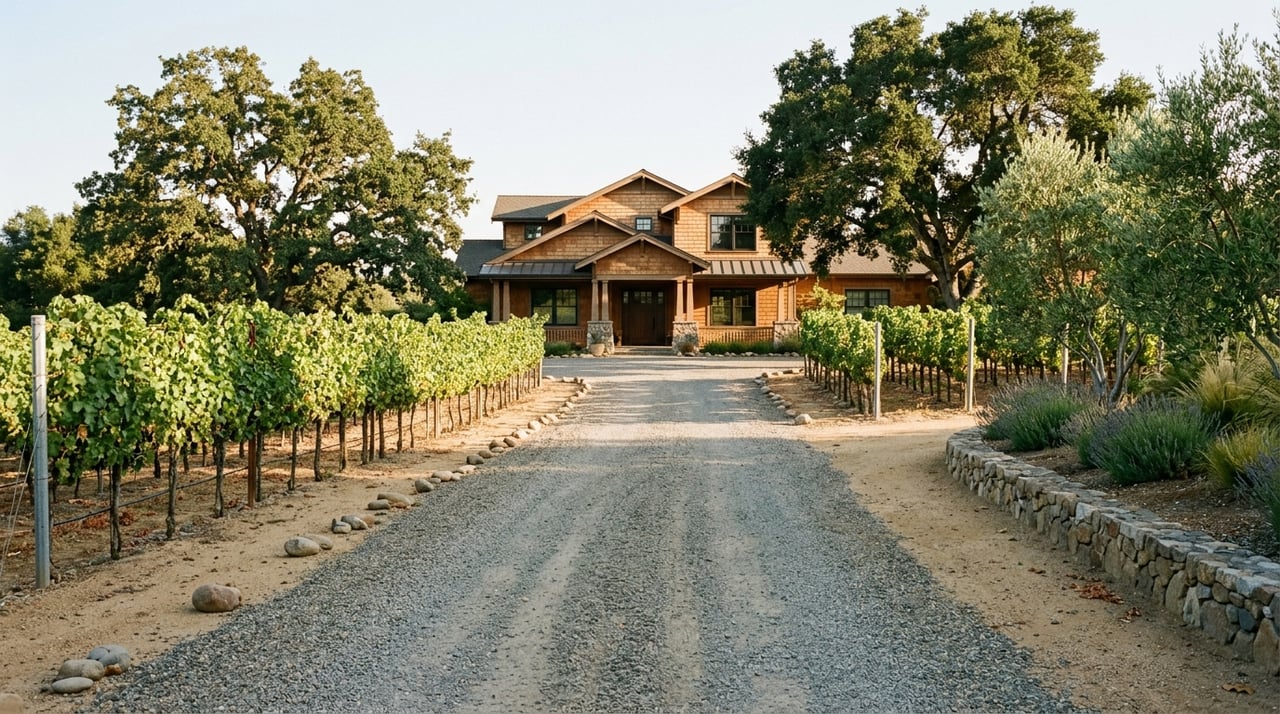
A beautiful view can be expensive to buy and even more expensive to improve. In Chalk Hill, the parcels that truly hold long-term estate potential are not always the ones that look best at first glance. If you are considering a vineyard estate, rural retreat, or long-term land investment in this part of Sonoma County, it helps to know which site factors really matter before you fall in love with a property. Let’s dive in.
Why Chalk Hill draws estate buyers
Chalk Hill has a distinct identity within Sonoma County, near Windsor, and its location inside a layered appellation structure can shape how a property is understood and marketed. The AVA sits within Northern Sonoma and Russian River Valley, with a partial overlap into Sonoma Coast. For you as a buyer, that means a parcel’s exact position can influence how it compares with nearby vineyard and estate properties.
The area also offers a specific climate profile that matters for land use. Federal AVA rulemaking described Chalk Hill as marine influenced, with thermal belts that can help protect against spring frost. It is generally warmer than the broader Russian River Valley, but cooler than Alexander Valley and Dry Creek Valley.
That middle ground is part of the appeal. You get a site context that can support both residential enjoyment and agricultural use, but not every parcel performs the same way. In Chalk Hill, small shifts in elevation, air flow, and sun exposure can create meaningful differences from one property to the next.
Start with the land, not the brochure
When you evaluate estate potential in Chalk Hill, the land itself should lead the conversation. Acreage alone does not tell you much about usability, future costs, or long-term value. A parcel with less acreage but better topography, drainage, and access may be more useful than a larger property with hidden constraints.
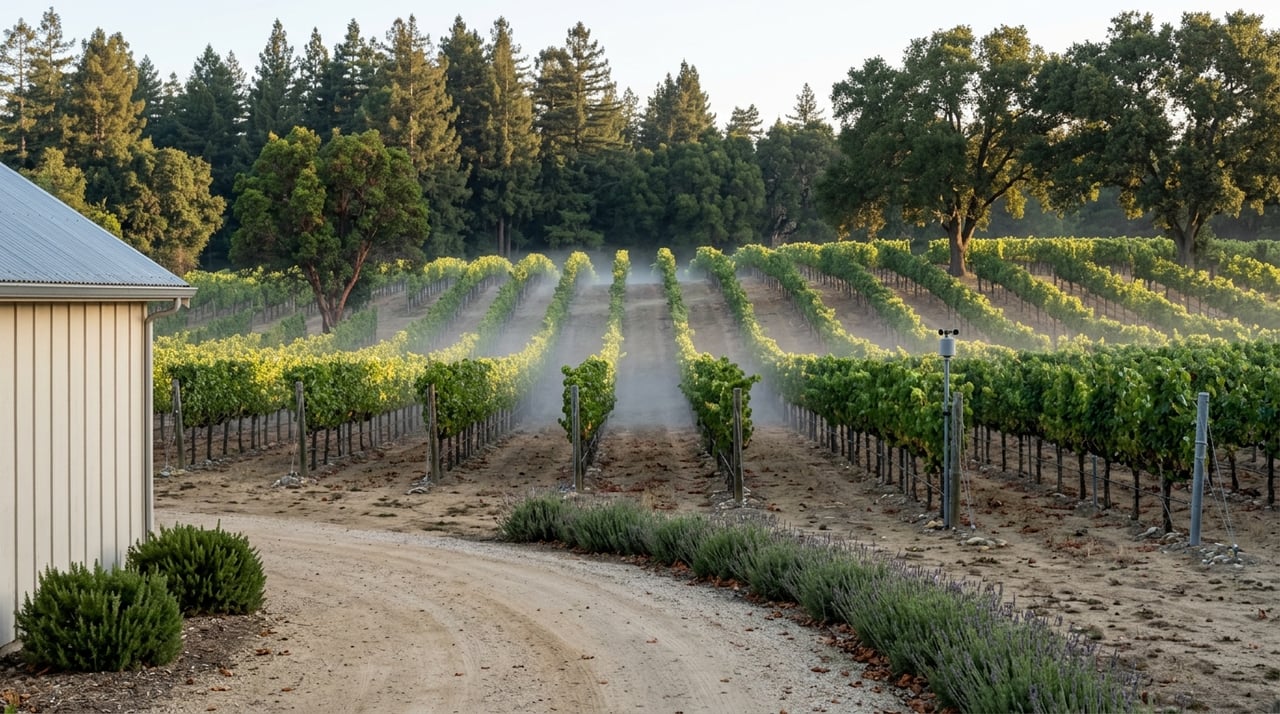
Chalk Hill terrain is typically made up of rolling to steep benchlands, tablelands, and hills. Much of the land ranges from about 200 to 1,330 feet in elevation, and vineyards commonly sit between 200 and 800 feet. That variation matters because a site’s practical performance often comes down to where the usable portions of the property actually lie.
A good estate parcel usually has more than scenery. You want to see usable benches, sensible access, and a realistic building area that fits the way you plan to use the property. That is especially true if you are thinking about a future guest house, vineyard component, or other improvements.
Soil quality can shape long-term value
In Chalk Hill, soils are one of the strongest clues to estate potential. AVA rulemaking describes the area’s soils as white, volcanic ash-derived soils that range from sandy and silt loam to clay and quartzite. They are generally deep but low in fertility, which is part of what makes the area distinct.
For a buyer, the key point is not just that the soils sound appealing on paper. You need to know how the actual parcel soils behave at the likely building site and any potential planting areas. The Natural Resources Conservation Service says soil surveys can help identify soil-related hazards and land-use limitations, and Web Soil Survey is the public tool for parcel-level soil data.
That is a useful first screen, but not the final answer. UC Agriculture and Natural Resources recommends field sampling to measure texture, water-holding capacity, pH, nutrient levels, and organic matter. If you are seriously evaluating an estate parcel, this step can help you understand whether the site supports your plans or introduces extra cost.
Check slope, drainage, and aspect early
Topography can add value or create problems. In Chalk Hill, slope, aspect, and drainage can matter just as much as soil type because they affect usability, erosion, cold-air movement, and development cost. A dramatic hillside may be visually compelling, but that does not automatically make it the best estate site.
UC guidance notes that grapes generally do best on well-drained soils and that poor drainage should be avoided. It also notes that slight to moderate slopes can improve cold-air drainage, while slopes above about 15% are often more problematic. In practical terms, you are looking for a property that drains well and has terrain that supports your intended use without forcing excessive site work.
Aspect should also be considered in relation to the specific parcel, not by a simple rule of thumb. Chalk Hill is a transitional area with meaningful microclimate differences, so exposure to sun, wind, and air drainage can vary from one hillside to another. The question is whether the parcel has balanced, usable terrain, not just a dramatic map.
Existing site work can save major money
One of the smartest ways to evaluate estate potential is to ask what work has already been done well. TTB noted that steeper Chalk Hill vineyards are often contoured or terraced. If a property already has stable terraces, cut benches, drainage improvements, and reliable access routes, that can reduce the cost and complexity of future development.
The reverse is also true. A parcel that looks raw and expansive may require substantial grading, drainage correction, or road work before it can support the residence or agricultural use you have in mind. Low pockets that trap cold air or areas that shed water poorly can be less useful than they appear during a quick tour.
This is where an experienced site-level review becomes important. Estate potential is often found in the relationship between the home area, access points, drainage patterns, and any plantable or recreational land. The more that relationship is already solved, the more confidence you can have in the property’s long-term usability.
Access and road compliance matter more than buyers expect
In rural Sonoma County, access is not a small issue. Sonoma County’s Fire Safety Ordinance requires all roads and driveways to have all-weather surfaces, sets surfacing rules by grade, limits steep driveway grades without approval, and requires turnarounds on dead-end roads. Bridges and gate entrances are also regulated.
That means a long, scenic drive can come with real cost if it does not meet current standards. If you are comparing parcels, road condition and compliance should be part of your value analysis from the beginning. A property with easier, more compliant access may offer better long-term estate utility than a more dramatic site with expensive road upgrades ahead.
This is especially relevant if you expect frequent guests, service access, or future construction activity. The road is part of the estate, not just the route to it. In many cases, it is one of the first places hidden costs show up.
Fire planning is part of estate planning
Wildfire planning should be central to any Chalk Hill acquisition analysis. CAL FIRE and the Office of the State Fire Marshal classify hazard levels as Moderate, High, or Very High based on fire history, fuels, terrain, embers, and expected fire weather over a 30- to 50-year horizon. The state also makes clear that hazard is not the same as actual risk.
That distinction matters. A property in a mapped hazard area is not automatically a poor purchase, but it does require a more informed review. Defensible space and home hardening can materially improve survivability, so the practical question is how well the site can support those measures.
In Chalk Hill, steep terrain and dry summers make this a core part of evaluating long-term value. When you tour a property, pay attention to road access, vegetation patterns, slope, and the likely ease of creating and maintaining defensible space. These are not secondary details in a rural estate market.
Water, septic, and future capacity can define value
Many buyers focus first on views, architecture, or vineyard rows. In reality, water yield and septic capacity can be the factors that most directly limit what you can do with the property over time. Sonoma County guidance says building permits are reviewed for septic approval, and a site cannot be developed beyond its ability to absorb sewage effluent.
The county also notes that reserve replacement area may need to be clearly shown. If you are planning a guest house, larger remodel, or additional support structures, those future plans should be tested against septic and water realities early. Sonoma County’s ADU rules also require adequate septic capacity and water yield.
This is one of the biggest differences between a scenic parcel and a true estate-grade property. The latter is not just attractive today. It has the infrastructure capacity, or at least the documented potential, to support thoughtful future use.
Vineyard plans trigger another layer of review
If vineyard development or replanting is part of your vision, Sonoma County’s VESCO program becomes especially important. The county administers vineyard and orchard site development, along with agricultural grading and drainage. Its review framework may involve geologic, geotechnical, soils, drainage, and biological reports.
Sonoma County also states that new vineyard and orchard plantings or replants in designated critical habitats require a biological assessment. In the Russian River watershed, frost-protection water systems must be registered with the county Agriculture department. For you as a buyer, that means future vineyard potential should be reviewed with process and timing in mind, not just romance.
A parcel may look ideal for expansion, but if the review path is complex, the timeline and carrying costs may be very different from what you first imagined. Estate potential is strongest where the land and the entitlement path are reasonably aligned.
Practical questions to ask before touring
Before you schedule a full day of property tours, a few smart questions can narrow the field quickly. These questions help you focus on estate-grade usability rather than surface appeal.
- Is the soil well drained at the likely building and planting areas?
- What does Web Soil Survey show for the specific parcel locations that matter most?
- Does the slope help air drainage without creating major erosion or access issues?
- Are the roads, gates, bridges, and dead-end lengths already compliant, or likely to need upgrades?
- Is there enough septic reserve area and water yield for the current improvements and possible future additions?
- If vineyard expansion is planned, are grading, drainage, frost-water, or biological review triggers already known?
These are the questions that often separate a merely scenic property from one with real estate-grade staying power. They also help you compare two beautiful parcels in a more disciplined way.
How to think about estate potential in Chalk Hill
The best Chalk Hill properties tend to balance beauty with practicality. They offer the setting buyers want, but they also make sense on the ground. That means useful topography, appropriate soils, workable drainage, compliant access, and realistic infrastructure capacity.
For high-value rural property, long-term value usually comes from constraints you understand, not just features you admire. A strong estate parcel gives you confidence about how the land can perform over time, whether your goal is a personal retreat, a vineyard estate, or a legacy holding in Northern Sonoma County.
If you are evaluating Chalk Hill property at a high level, it helps to look past the first impression and study the site as carefully as the residence. That is often where the real value story begins.
If you are considering buying or selling a distinctive Chalk Hill estate, vineyard, or landholding, Graham Sarasy offers discreet, high-touch guidance grounded in deep Northern Sonoma County market knowledge.
FAQs
What makes a Chalk Hill property estate-grade?
- A Chalk Hill property generally feels more estate-grade when it combines usable topography, well-drained soils, workable access, and enough water and septic capacity to support current and future use.
Why do soils matter when evaluating Chalk Hill estate potential?
- Soils can affect drainage, planting suitability, and development limitations, which is why parcel-level soil review and field sampling are important parts of due diligence.
How important is road access for Chalk Hill rural property?
- Road access is very important because Sonoma County regulates driveway surfacing, grades, dead-end turnarounds, bridges, and gates, and needed upgrades can add significant cost.
What should buyers know about wildfire hazard in Chalk Hill?
- Buyers should know that state hazard maps measure wildfire hazard rather than actual risk, and that defensible space and home hardening can materially improve how a property performs.
Can septic and water limits affect future improvements in Chalk Hill?
- Yes, septic reserve area and water yield can directly affect whether a property can support additions such as a guest house, remodel, or other future improvements.
What if I want to plant or replant vineyard acreage in Chalk Hill?
- Vineyard plans may trigger Sonoma County review for grading, drainage, soils, geology, biology, and frost-water registration, so expansion potential should be checked before you assume the land is ready.