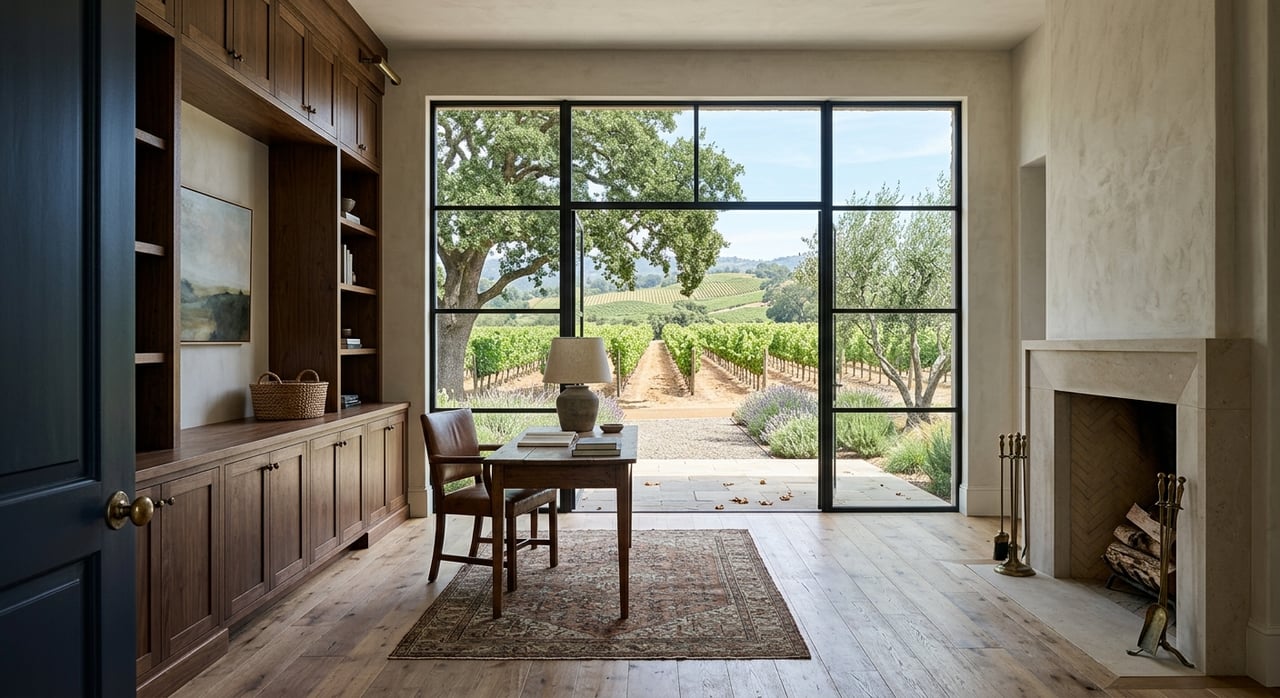
If you are trying to make sense of the luxury land market in Healdsburg wine country, you are not alone. Land here rarely trades like a simple per-acre commodity because buyers are often weighing vineyard potential, estate use, privacy, water, access, and long-term holding costs all at once. The good news is that there are clear signals you can watch, and reading them well can help you price, buy, or evaluate a property with more confidence. Let’s dive in.
Why Healdsburg Land Is Different
Luxury land around Healdsburg is shaped by wine-country geography, not just town boundaries. The area connects to well-known Sonoma County appellations including Alexander Valley, Dry Creek Valley, Russian River Valley, Chalk Hill, and Green Valley of Russian River Valley, and that AVA identity can influence how buyers see value.
This is also a region with unusual tourism and winery density. Wine Road describes its core territory as Alexander, Dry Creek, and Russian River valleys, with nearly 140 wineries and 35 lodgings in its association and more than 190 wineries within a 30-mile radius. That helps explain why many parcels are evaluated as both lifestyle assets and production assets.
In practical terms, a luxury land buyer is often not just asking, "How many acres?" They are also asking how the parcel fits into the broader Healdsburg wine-country story, what it can support, and how it will hold value over time.
What the Market Is Saying Now
The broader Healdsburg market has softened compared with the strongest seller years. While different housing data sources track different slices of the market, the pattern is fairly consistent: buyers have more room to negotiate than they did a few years ago.
For example, Zillow’s Healdsburg market data showed a March 31, 2026 home value of $1,102,688, down 2.7% year over year, along with 61 homes for sale and a median list price of $1,481,000. Local reporting also points to a slower luxury environment, with the Healdsburg Tribune noting in 2025 that luxury homes over $2 million were taking about 180 days to sell.
Land can move even more slowly than improved homes. The same local reporting noted that vacant lots across the county averaged 110 days on market in 2025. That matters because raw land usually requires more due diligence, more imagination, and stronger documentation than a finished home.
Why Luxury Land Can Lag Homes
A house is easier for many buyers to understand. Land, especially vineyard or estate land, asks buyers to underwrite future potential, permitting pathways, utility realities, and development costs.
That extra complexity can stretch timelines. In a more negotiable market, buyers tend to move carefully, ask more questions, and place a premium on parcels that come with clean, organized information on water, access, zoning, and improvements.
For sellers, this means the old strategy of "try a high price and see what happens" can be expensive. The Healdsburg Tribune reported that homes priced correctly from day one sold for 97.2% of original list in 55 days, while listings that chased the market sold for 81.2% of original list in 213 days. The principle is especially relevant for land, where uncertainty already narrows the buyer pool.
AVA Identity Still Matters
In Healdsburg wine country, appellation identity remains one of the clearest price drivers. Parcels associated with recognized wine regions can attract more attention because buyers often see the location itself as part of the value proposition.
That does not mean every acre inside a notable AVA commands the same price. It means buyers may weigh AVA credibility alongside things like views, privacy, road approach, and how closely a parcel connects to established winery corridors.
Two properties with similar acreage can trade very differently if one has a stronger sense of place or a clearer vineyard story. In this market, provenance matters, and buyers often pay close attention to it.
Vineyard Economics Are Part of the Equation
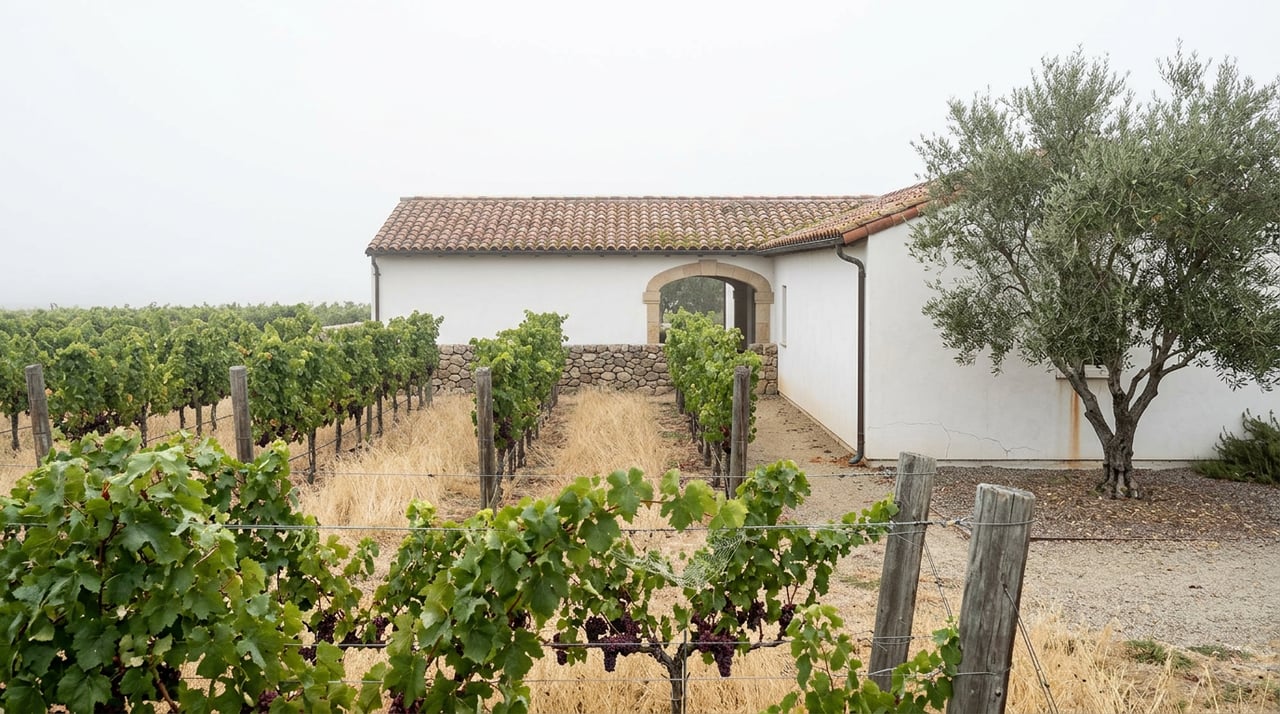
If a parcel has vineyard potential or existing vines, grape economics deserve a close look. According to the USDA/NASS 2025 preliminary crush report, District 3, which includes Sonoma and Marin counties, averaged $2,761.37 per ton, down 5.7% from 2024.
That shift does not tell the whole story for any one parcel, but it does affect how buyers think about income assumptions, financing, and long-term returns. Softer grape pricing can make buyers more selective, especially if a property needs major capital investment before production can begin.
At the same time, development costs remain meaningful. UC Cooperative Extension Sonoma County notes that vineyard establishment costs can exceed $20,000 per acre before land cost, cash overhead, or non-cash overhead. Because of that, an existing vineyard or a parcel with verified plantable acreage and strong water access may carry far more value than a similar-looking raw site.
The Due Diligence Items Buyers Watch
In luxury land, due diligence is not a side conversation. It is often the core of the investment decision.
UC ANR guidance highlights how land use in Sonoma County can be shaped by Permit Sonoma zoning, groundwater availability, and permit type. Certain groundwater classifications can trigger studies or use permits, and small-scale agricultural processing is limited to specific zoning districts.
For you as a buyer or seller, that means these details often have direct pricing impact:
- Water source and well performance
- Septic feasibility
- Access and road frontage
- Zoning and permit pathway
- Usable building envelope
- Verified plantable acreage
- Existing improvements and their condition
A parcel with strong answers to those questions can feel much more financeable and usable. A parcel with vague answers may still be attractive, but buyers will usually price in that uncertainty.
Wildfire and Insurance Matter More Than Ever
Wildfire exposure is now a standard part of land analysis in many parts of wine country. CAL FIRE’s Fire Hazard Severity Zone information explains that hazard zones are classified as Moderate, High, or Very High based on factors such as fuel, slope, weather, fire history, and ember movement.
For parcels in State Responsibility Areas or Very High zones, defensible space and home-hardening responsibilities can affect planning and future carrying costs. Even before a structure is built, hazard exposure can shape buyer confidence and insurance conversations.
This does not make a property undesirable by itself. It does mean buyers are increasingly factoring long-term resilience and operating costs into what they are willing to pay.
Tax Structure Can Influence Holding Costs
Some agricultural properties may benefit from Williamson Act treatment. The California Department of Conservation explains that these contracts restrict land to agricultural or open-space use in exchange for property tax assessments based on farming and open-space use rather than full market value.
For legacy vineyard holdings, ranches, or long-term land positions, that tax structure can play an important role in holding-cost analysis. It is not a fit for every buyer or every property, but it can materially affect how ownership pencils out over time.
If you are evaluating land as a long-hold asset, it helps to look beyond purchase price alone. Property taxes, insurance, water infrastructure, permitting costs, and deferred improvements all shape the real carrying picture.
Who Is Buying in Healdsburg Wine Country
The buyer pool remains lifestyle-driven, but it is mixed. Wine Road presents the region as a year-round destination, and local reporting from the Healdsburg Tribune suggests that a significant share of purchases are not primary residences, especially in rural areas.
That matters because not every buyer is underwriting land the same way. Some are focused on legacy ownership and personal enjoyment. Others are looking for vineyard potential, second-home use, or a trophy asset with a strong sense of place.
When you understand which buyer profile best matches a parcel, the market becomes easier to read. The strongest outcomes often happen when the pricing, presentation, and due diligence package align with the most likely audience.
What Sellers Should Do Now
In this market, preparation is part of pricing strategy. Buyers are more deliberate, and the properties that stand out are usually the ones that make it easy to verify what is being offered.
If you are thinking about selling luxury land or a vineyard parcel, focus on assembling a clear property story supported by documentation. That may include zoning details, well information, maps, access details, plantable acreage analysis, improvement records, and any agricultural operating history you can substantiate.
You also want pricing discipline from the start. In a slower luxury segment, a well-positioned launch often protects both time on market and negotiating strength.
What Buyers Should Look For
For buyers, softer conditions can create opportunity, but only if the parcel works on its own merits. A lower asking price is not always a bargain if water, access, or permitting become expensive obstacles later.
The most defensible acquisitions are often the ones with a clear path forward. That may mean verified water, useful soils, realistic building potential, and manageable regulatory friction, along with a location that supports either agricultural use or long-term lifestyle value.
If you are comparing multiple parcels, try to evaluate them through both lenses. Ask what the land is worth as a place to own and enjoy, and also what it would take to make the economics work over time.
Reading the Market With More Clarity
The luxury land market in Healdsburg wine country rewards careful reading. Acreage still matters, but it is only one part of the picture. AVA identity, water, vineyard economics, wildfire exposure, tax structure, and buyer profile all shape how a parcel is perceived and what it can ultimately command.
That is why specialized local context matters so much in this segment. If you are preparing to buy, sell, or simply understand the value of a distinctive wine-country parcel, working with an advisor who understands the moving parts can make the process far more productive. When you are ready for a confidential conversation about estates, vineyards, ranches, or land in Healdsburg wine country, connect with Graham Sarasy.
FAQs
How is luxury land in Healdsburg different from standard residential property?
- Luxury land in Healdsburg is often valued based on a mix of acreage, AVA identity, vineyard or estate potential, water access, privacy, and long-term holding costs rather than simple lot size alone.
What does AVA identity mean for Healdsburg land values?
- AVA identity refers to a parcel’s connection to recognized wine-growing regions such as Alexander Valley, Dry Creek Valley, or Russian River Valley, and buyers often see that location context as part of the property’s value.
Why can Healdsburg vineyard land take longer to sell?
- Vineyard and estate land usually requires more buyer diligence on zoning, water, access, and economics, so the pool is narrower and transactions often move more slowly than improved-home sales.
What due diligence matters most for Healdsburg luxury land buyers?
- Buyers typically focus on water source, well performance, septic feasibility, access, zoning, permit pathways, usable building envelope, and whether plantable acreage has been verified.
How do grape prices affect vineyard parcel values in Sonoma County?
- Grape prices can influence income projections and financing assumptions, so softer pricing may make buyers more selective when evaluating vineyard land or redevelopment opportunities.
What is the Williamson Act and why does it matter for Sonoma County land?
- The Williamson Act is a California program that can reduce property tax assessments for qualifying agricultural or open-space land, which may improve long-term holding economics for some parcels.